5 Ways to Keep Your School Safe from Intruders

At Eastern DataComm, we’ve covered ways to keep your school safe from intruders in past pieces. In this blog, we’re sharing an updated look at these issues, including five approaches you can take to keep your schools connected and protected. Improve your school’s safety and communications profile by reading along and implementing these recommendations.

#1 Consider Your Whole School Safety Ecosystem

Our Eastern DataComm team is passionate about strategizing and supporting the technology systems that impact the entire school safety ecosystem. And with good reason: A holistic approach to preventing intruders includes a variety of aspects that you may not have initially considered as ‘essential’ to full safety success. The truth is that these facets, from planning, compliance, and protocol development, to practice drills and technology, are interwoven – working in unison to create a safe environment for all. 

Two examples of enhancing your school safety ecosystem include (1) the creation and execution of a school safety plan and (2) the education of students and stakeholders on that plan.

Every school needs an effective safety plan for addressing a host of potential issues, including unwanted intruders, emergencies, and lockdowns resulting from identified threats like active shooter incidents. School safety plans are comprised of a variety of assets, including site assessments, threat assessments, and employee and student training.

Training educators, staff, and students in effective responses to lockdowns and other intruder threats results in a school-wide understanding of the precautionary measures and the in-circumstance behaviors that are needed to save and preserve lives. Simply put: When students and others in the building are aware of how to respond and practice such responses regularly, even if they may be frightened during a real intruder event, they will still be able to take action immediately – out of habit rather than out of panic and confusion. That, in itself, saves lives.

#2: Upgrade Outdated Technology to Enhance Emergency Response

Schools across the country are working diligently to protect students, staff, and educators each day and our team is here to help. 

One of the primary ways we support our clients is to consult with them regularly – offering our insights on advancements in safety and communications technology that can benefit their unique needs. Additionally, we diagnose areas of concern in need of improvement and highlight strengths in their existing systems that can be leveraged for integration with new safety technologies. Let’s explore this example: You’ve just installed a state-of-the-art video surveillance system. But your intercom system produces less-than-optimal function resulting from years or decades of adding on speakers without an overarching strategy behind those additions. After performing a diagnostic review and confirming that your surveillance system is delivering optimal results, our recommendations for improvements focus on removing the limitations of your current intercom solution, which could be best addressed by upgrades to your VoIP and paging systems.

In many cases, learning which outdated technology is in need of an upgrade and then taking corrective action to implement an improved solution is an excellent way to protect your school’s buildings and grounds from intruders. It creates a greater likelihood of swift and effective responses during emergencies. And that’s a step in the right direction you’ll want to make sure you take.

#3: Ensure Telecommunications Devices and Systems Provide Crystal-Clear Communication

In an emergency, every second counts. And muffled voices or unclear phone conversations can mean disaster when an intruder is entering or attempting to enter your buildings or grounds. 

That’s why, at Eastern DataComm, we work with our clients to ensure they’re heard loud and clear when it matters most.

VoIP phone systems are the gold standard for schools and districts in need of clear communication. And with recent legislation requiring phone systems to have certain emergency-related capabilities, it’s more important than ever to consider your voice options.

VoIP systems also provide the opportunity to integrate the phone system with emergency notification systems and other safety technology solutions. And these systems can be customized to meet the needs of your school community in ways that make daily calls and even district-wide communication easier than before.

#4 Look for Ways to Enhance Security in Your Buildings and on Your Grounds

From access control to video surveillance and even paging systems, there are a variety of ways to enhance the overall security of your schools and district. But the important consideration is what makes the most sense for your needs and goals.

For example, video surveillance, when done well, can help to keep an around-the-clock eye on your buildings and grounds. This means you can monitor for intruders and immediately react as needed.

Access control systems allow you to control door locks and equip entryways with an added layer of security against intruders. This also helps make entry in the morning and dismissal less chaotic for visitors, staff, and students.

And, as the community learns of these added layers of protection, the systems you implement become a deterrent to those considering perpetrating unwanted actions.

#5 Remove the Chance for Human Error Wherever Possible with Integrated Technology

Intruder incidents can be terrifying and devastating if not responded to quickly and correctly. That’s why our Eastern DataComm team created an integrated technology system that reduces the chance of human error by ensuring all of your safety and security technology solutions are working together.

The Lockdown and Emergency Notification System and continuous monitoring service (LENS + OPTICS) provides comprehensive message dissemination when every second counts. It integrates with your school’s paging system as well as with your school’s VoIP phone system, lights and signage, access control, and video surveillance systems. The result is a swift and effective response to intruders that can be activated at the push of a button, by entering a code on a phone, or using an app-based initiation from a smart device.

Systems like this greatly reduce the chance of human error or having an emergency message ‘lost in translation’ when stress is high and time is limited. Utilizing this technology increases the chance that everyone in your buildings and on your grounds understands that there is an active threat or urgent situation occurring and can react as policy, procedure, and drill rehearsals have dictated. From LED beacons and signboards to PC pop-up messages, to emails, texts, and automated calls to police, everything is handled fast and efficiently.

Plus, OPTICS, the system self-monitoring technology, ensures that there is always a watchful eye on the components that enable optimal performance of your LENS system. Simply put, OPTICS ensures everything in your LENS system is running as it should be. 

By leveraging these technology solutions to your advantage, you can focus on what needs your attention most during an emergency.

Understanding Compliance: Navigating School Safety Regulations

Adherence to federal and state regulations is crucial for maintaining a secure educational environment. Key legislations such as Kari’s Law, the RAY BAUM’s Act, and Alyssa’s Law have been enacted to enhance emergency response and communication within schools.

Kari’s Law

Enacted in 2018, Kari’s Law mandates that multi-line telephone systems (MLTS) allow users to dial 911 directly without requiring any prefix. This legislation was inspired by a tragic incident where a child was unable to reach emergency services due to such a restriction. Compliance ensures that during emergencies, help is just three digits away.

How This Affects Schools: Schools must ensure their phone systems comply with Kari’s Law to allow direct 911 dialing, particularly in classrooms and administrative offices.

RAY BAUM’s Act

This act requires that any 911 call made from an MLTS provides a “dispatchable location,” ensuring that emergency responders can pinpoint the caller’s exact location within a facility. For schools, this means upgrading systems to transmit specific location details, such as building, floor, and room number, enhancing the efficiency of emergency responses.

How This Affects Schools: Schools need VoIP phone systems capable of transmitting room-level location data to first responders.

Alyssa’s Law

Named in memory of Alyssa Alhadeff, a victim of the Parkland school shooting, this law mandates the installation of silent panic alarms in schools. These alarms provide a direct link to local law enforcement, enabling swift action during critical situations. Implementing such systems not only complies with legal requirements but also significantly reduces response times during emergencies.

How This Affects Schools: Schools should implement panic buttons and automated lockdown systems integrated with emergency notification solutions.

Leveraging Access Control Systems to Prevent Unauthorized Entry

Unauthorized access poses a significant threat to school safety. Implementing robust access control systems is essential to monitor and restrict entry, ensuring that only authorized individuals can access the premises.

Electronic Keycards and Remote Locking Mechanisms

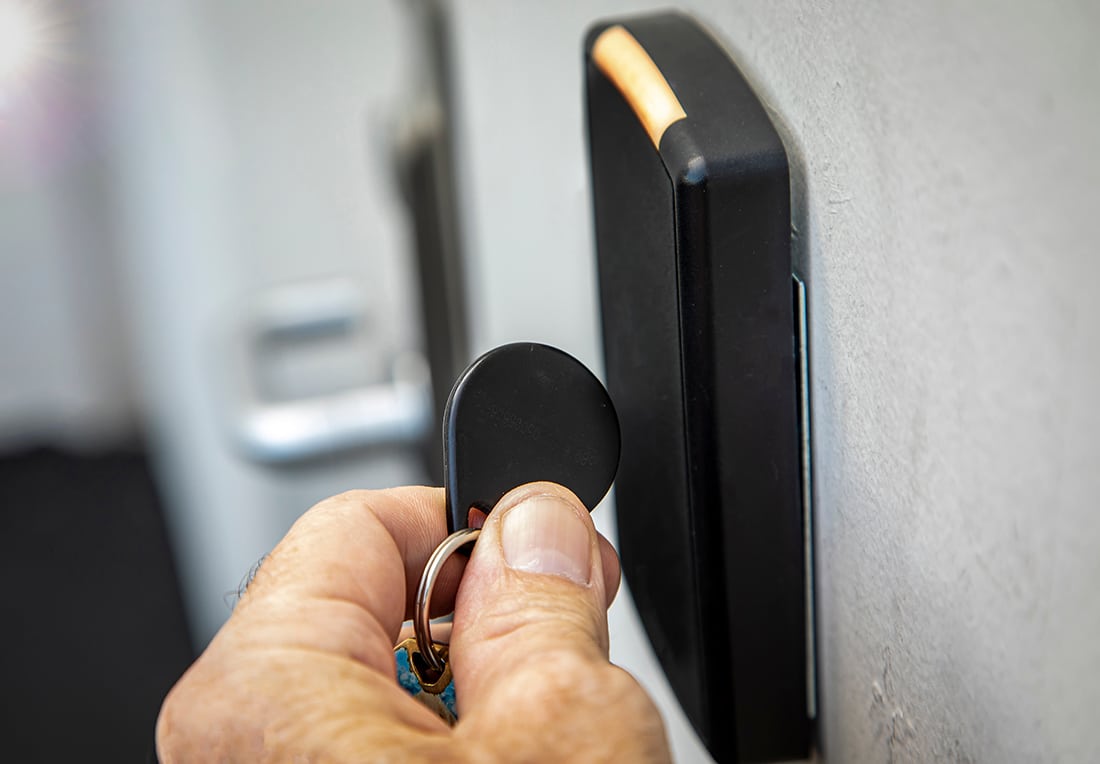
Transitioning from traditional lock-and-key systems to electronic keycards allows schools to monitor entry and exit in real time. Remote locking mechanisms enable administrators to secure all access points instantly during a potential threat, preventing intruders from moving freely within the facility.

Upgrading to electronic keycards allows schools to:

  • Control access remotely
  • Track who enters and exits the building
  • Lock doors instantly during a security threat

Visitor Management Systems

Modern visitor management systems require all guests to sign in and out, often incorporating identification scanning and badge printing. This process not only tracks who is on campus but also deters unauthorized individuals from attempting to enter.

AI and Automation in School Security: The Future of Protection

Artificial Intelligence (AI) and automation are revolutionizing school security by providing proactive threat detection and response capabilities.

AI-Powered Video Surveillance

Modern surveillance systems equipped with AI can identify unusual activities, such as unauthorized intrusions or suspicious behaviors, and send immediate alerts to security personnel. This real-time analysis enables swift intervention before situations escalate.

AI-powered cameras can:

  • Detect unusual movement or suspicious behavior
  • Recognize unauthorized individuals on campus
  • Send automatic alerts to school administrators

Facial Recognition Technology

Integrating facial recognition with existing security systems allows for the identification of individuals on watchlists or those who have been previously flagged, preventing potential threats from entering school grounds.

Automated Emergency Alerts

Automation ensures that once a threat is detected, predefined protocols are activated without delay. For instance, if an intruder is identified, the system can automatically initiate a lockdown, notify law enforcement, and broadcast alerts to all classrooms simultaneously.

Eastern DataComm’s LENS + OPTICS system integrates:

  • PA announcements
  • Text and email alerts
  • Automated police notifications

The Cost of Inaction: Why Schools Must Invest in Security

While enhancing school security requires financial investment, the cost of inaction can be far greater, both in terms of human lives and financial repercussions.

Financial Implications of Security Breaches

Schools that have experienced security breaches often face expenses ranging from $50,000 to $1 million, covering costs such as legal fees, infrastructure repairs, and crisis management.

Return on Investment (ROI) in Safety Measures

Investing in advanced security technologies not only mitigates potential losses but also fosters a secure learning environment, which is invaluable. Proactive measures can prevent incidents that disrupt education and incur significant costs.

Funding Opportunities

Recognizing the importance of school safety, various federal and state grants are available to assist institutions in implementing necessary security measures. For example, in fiscal year 2023, the COPS Office awarded over $73 million through the School Violence Prevention Program (SVPP) for purposes including acquiring technology for the faster notification of law enforcement during emergency situations.

Additional grants are available through the Department of Education’s Office of Elementary and Secondary Education, as well as the Department of Homeland Security.

Strengthening Cybersecurity: Protecting Digital & Physical Safety

In today’s digital age, protecting against cyber threats is as crucial as physical security.

Prevalence of Cyber Attacks in Schools

Educational institutions have become prime targets for cybercriminals. Schools face increasing cyber threats, from ransomware attacks to data breaches affecting student records.

Common Vulnerabilities

  • Human Error: A significant number of breaches result from phishing attacks and weak password practices.
  • Phishing Scams: Staff accidentally click on malicious links.
  • Weak Passwords: Inadequate protection of school networks.
  • Outdated Software: Security gaps in old operating systems.

Safer Schools Start Here

Reach out to Eastern DataComm today to schedule a customized School Safety Consultation to keep your learning community connected and protected.

Also Read:

7 Ways to Improve School Safety for the 2023–2024 School Year

In 2021, our Eastern DataComm team released a blog regarding five ways to improve school safety. 

Today, with over twenty recent incidents of school violence continuing to devastate districts across the country, we’re revisiting this topic with renewed focus. As we continue our commitment to be part of the solution, we’re bringing you seven ways you can improve school safety in the upcoming school year.

We hope this insight will help you and your fellow school or district stakeholders have impactful conversations about enhancing safety in your buildings and on your grounds. We encourage you to leverage this information to assist with ensuring your school remains a safe learning environment for all those you serve.

7 Ways to Boost School Safety in 2023–2024

1. Practice Emergency Plans (for Quick Lockdowns)

A great first step in improving your school or district’s safety is to refine, enhance, and practice your emergency response plans.

From lockdowns and active shooter events to shelter in place and evacuation drills, when repetition is combined with effective planning and the right technology, schools become safer by design.

This is perhaps most evident when it comes to lockdown drills and preparing for urgent events like those that make national headlines. 

As a stakeholder at one of our client districts explains,

“If everybody can lock down before that perpetrator gets into the hallway, and the hallways are clear, that person’s going to be going down the hallway, looking for kids … and we’re locked down.

“So it is extremely, extremely relevant and important that the faster that we have the ability to put the school on lockdown, the more lives that we could be saving… With our drills, we’re locked down, basically clearing the halls within 10 seconds … And the more quickly we secure the buildings, that’s more lives that we’re going to save.”

– District Safety and Emergency Management Coordinator

A Burlington County, NJ, School District

There is no way to overstate the vital nature of swift and effective lockdowns. And that all begins with practice.

2. Monitor School Visitors

Another key way to improve your school’s overall safety is to ensure you can effectively monitor school visitors. 

School identification cards are a great first step for staff, educators, administrators, aides, and students. But what about parents, guardians, and other visitors?

When it comes to improving school safety, technology solutions like video surveillance and access control can help you keep unwanted visitors out of your school and allow those who need access to your learning community to gain entry in a way you can track, monitor, and regulate.

3. Create a Supportive Environment

Improving school safety requires a supportive environment. And a supportive environment encompasses administrative and counseling support for students who need it. While those resources are incredibly essential and impactful, they’re only part of the story.

The school safety ecosystem also includes resource officers and police, training, threat assessment, compliance with state and federal law, and technology infrastructure. That technology infrastructure, in order to be effective, must be comprehensive. Total coverage ensures everyone can be made aware of an emergency quickly and effectively. With tech solutions like video surveillance, access control, paging systems, and VoIP phone systems, your safety technology ecosystem becomes all the more responsive. 

Creating a supportive environment begins with empowering confidence. That comes from knowing that everyone can get the important emergency notification messages they need when it matters most. This is achieved through utilizing and integrating underlying systems that enable rapid communication when every second counts.

4. Get Stakeholders Involved throughout the Process of Making Your School Safer

Making schools and districts safer is a team effort. The most commonly recognized players are our school administrators, staff, teachers, counselors, technology professionals, and the local emergency services teams. 

But it bears mentioning that custodians, parents, guardians, teaching aides, school board members, and PTA members can also help to actively improve school safety when they’re brought to the table to share their insights. Whether it’s a feedback session, more formal meetings, or presentations at their meetings, getting these groups on board is a great asset.

It also serves to keep everyone on the same page in case of a real emergency.

Each of these groups or individuals has a unique perspective on what’s working, what may need improvement, and how that improvement might be achieved. And they all share in your goal of protecting those within your school walls and on your grounds each day.

5. Create Partnerships That Foster a More Robust School Safety Ecosystem

Fostering a truly comprehensive and robust school safety ecosystem also includes those in disciplines beyond education.

Enhancing your relationships with local emergency responders and police is a great place to start. While you’ve surely established these relationships, it can be impactful to foster them with more regular meetings, an ongoing discussion on potential improvements, and an exploration of enhancements for things like drills and best practices. 

Developing partnerships with a safety and communications technology partner like Eastern DataComm is also immensely valuable. These relationships can help you prepare in every possible way for an emergency, unearthing vulnerabilities you and your team may not yet have been aware of, but now can proactively address. Ultimately, building these relationships can lead to a stronger school safety ecosystem overall. Professionals can help you strategically improve your school safety ecosystem by educating, implementing, and advising you regarding your school’s evolving needs. Our team at Eastern DataComm is dedicated to doing just that.

6. Recognize Potential Vulnerabilities in Your Buildings and Grounds and Work to Address Them

It can be devastating to reflect on past tragedies from Columbine to Uvalde and realize that our schools may have similar challenges when it comes to safety even today. But the very act of identifying these potential areas of vulnerability is a step in the right direction.

One way to begin the process of identifying issues in your buildings and grounds is to connect with your team and a safety and technology advisor or vendor partner. Together, you can move through a comprehensive assessment and create a game plan for enhancements that will really make all the difference in the event of a school-wide emergency.

At Eastern DataComm, our team begins this process. Our school safety consultative and diagnostic approach allows us to partner with schools and districts to assess and take meaningful action to address areas of potential vulnerability and empowers our customers to take charge of creating safer schools for today and beyond.

7. Consider Integrating Your School Safety Technology for Swifter, Streamlined Responses to Emergencies

A final consideration that bears noting when it comes to improving your school’s safety is the power of integration. Integrating your technology solutions, from phones to public address (PA) systems, video surveillance to access control, can reduce the chance of human error during stress-filled emergency situations.

Eastern DataComm’s LENS + OPTICS system is a practical example of this integrated approach to school safety. The Lockdown and Emergency Notification System (and its self-monitoring OPTICS system) allow schools to immediately notify everyone on campus, along with law enforcement and first responders, once a threat has been recognized.

The process begins with the push-button activation of a lockdown, shelter-in-place, or evacuation. This emergency notification solution includes scalable, integrated technology from phones, wireless devices, strobes, and pre-recorded notifications. This comprehensive approach to lockdowns ensures that everyone is aware of the situation and can respond efficiently and effectively, with a reduced risk of human error. 

For further customization, the integrations can be personalized to the needs of your school so that you have the means to achieve a connected and protected school environment.

It’s truly the system you want in place when every second counts.

Strengthening Access Control for Schools: Beyond Visitor Management

While monitoring visitors is essential, schools must take a proactive approach to access control to prevent unauthorized entry.

Key Access Control Solutions

  • Electronic Badge Systems – Require students, staff, and visitors to scan ID badges at entry points, ensuring only authorized individuals can access school buildings.
  • Remote Locking Mechanisms – Allow administrators to secure all doors remotely during an emergency, preventing intruders from moving freely through the school.
  • Door Prop Alarm Systems – Detect propped-open doors and send alerts to security personnel, reducing the risk of unauthorized access.
  • Man-Trap Entryways – A two-door entry system that requires visitor verification before allowing full access, adding an extra layer of security.

How Schools Can Implement Stronger Access Control

  • Conduct monthly access audits to identify vulnerabilities in entry points and lock systems.
  • Integrate access control with emergency notification systems to trigger automatic lockdowns.
  • Train staff on how to use and enforce access control protocols effectively.

School Safety Laws and Compliance: What Schools Must Follow

Beyond emergency planning and security upgrades, compliance with federal and state safety laws is essential to ensuring a legally sound and effective security strategy.

Federal Regulations That Impact School Security

Kari’s Law – Requires that all multi-line telephone systems (MLTS) allow users to dial 911 directly without needing to dial a prefix. This ensures instant emergency communication from any school phone.

RAY BAUM’s Act – Schools must ensure that 911 calls provide a precise location, such as room number or building name, so first responders know exactly where to go.

Alyssa’s Law – Requires schools to install silent panic alarms directly connected to law enforcement, reducing response times during emergencies.

Why Compliance Matters

Non-compliance with these regulations can lead to delays in emergency response, legal liabilities, and funding issues. Schools should routinely audit their phone systems, emergency notification tools, and access control measures to ensure compliance.

The Financial Impact of School Security: Why Investment Is Essential

Some schools delay security upgrades due to budget constraints, but investing in education security is not optional—it’s necessary.

The Hidden Costs of Security Failures

Schools that experience security breaches, unauthorized intrusions, or emergency response delays can face the following:

  • Legal consequences if safety compliance is not met.
  • Higher insurance premiums due to increased liability risks.
  • Potential loss of funding if state safety standards are violated.

Federal and State Funding for School Safety

  • Bipartisan Safer Communities Act – Provides $1 billion in federal grants for school security and mental health programs.
  • STOP School Violence Act – Offers funding for security technology, threat assessments, and school safety training.
  • State-Level Grants – Many states offer specific funding opportunities for access control, emergency notification systems, and security infrastructure upgrades.

How Schools Can Secure Funding for Safety Upgrades

  • Identify grant opportunities through state and federal agencies.
  • Work with security vendors like Eastern DataComm to build a cost-effective implementation plan.
  • Leverage community partnerships for additional financial support.

The Future of School Security: Emerging Technologies to Watch

Advancements in security technology continue to shape how schools detect threats, respond to emergencies, and improve communication.

AI-Powered Security Enhancements

  • Facial Recognition Entry Systems – Restrict access to authorized personnel and flag unknown individuals in real time.
  • Gun Detection AI for Security Cameras – Uses pattern recognition software to detect weapons and alert authorities instantly.
  • Automated Lockdown Systems – AI-driven access control that automatically locks doors when a threat is detected.
  • Smart Panic Buttons – Wireless devices that trigger instant lockdowns and emergency alerts when activated.

Integration with Existing School Security Systems

New security technologies must be compatible with existing infrastructure, such as intercom systems, video surveillance, and access control tools, to ensure a seamless emergency response.

Improving School Safety Starts with the Right Technology Partner

Creating a safe and secure learning environment requires proactive planning, the right technology, and expert guidance. If you’re a teacher looking to make your school a safer place, we encourage you to share this resource with your administration.

And if you’re an administrator, we’d love to connect with you to explore technology solutions that augment your emergency operations plans.

At Eastern DataComm, we help schools implement:

  • Advanced access control systems to restrict and monitor entry.
  • Emergency notification solutions that integrate with paging, text, and digital signage.
  • VoIP phone systems that meet Kari’s Law and RAY BAUM’s Act compliance.
  • AI-powered security enhancements for real-time threat detection.

Reach out to Eastern DataComm today to schedule a customized School Safety Consultation to keep your community connected and protected.

Also Read: 5 Ways to Improve Schools Safety
Proud Member Of

Society of Communications Technology Consultants International SCTC logo
New Jersey School Boards Association NJSBA logo
Educational Services Commission of New Jersey ESCNJ logo
Monmouth Ocean Educational Services Commission MOESC logo
Connecticut Association of Public School Superintendents CAPSS logo