7 Ways to Improve School Safety for the 2023–2024 School Year


In 2021, our Eastern DataComm team released a blog regarding five ways to improve school safety.
Today, with over twenty recent incidents of school violence continuing to devastate districts across the country, we’re revisiting this topic with renewed focus. As we continue our commitment to be part of the solution, we’re bringing you seven ways you can improve school safety in the upcoming school year.
We hope this insight will help you and your fellow school or district stakeholders have impactful conversations about enhancing safety in your buildings and on your grounds. We encourage you to leverage this information to assist with ensuring your school remains a safe learning environment for all those you serve.
7 Ways to Boost School Safety in 2023–2024
1. Practice Emergency Plans (for Quick Lockdowns)
A great first step in improving your school or district’s safety is to refine, enhance, and practice your emergency response plans.
From lockdowns and active shooter events to shelter in place and evacuation drills, when repetition is combined with effective planning and the right technology, schools become safer by design.
This is perhaps most evident when it comes to lockdown drills and preparing for urgent events like those that make national headlines.
As a stakeholder at one of our client districts explains,
“If everybody can lock down before that perpetrator gets into the hallway, and the hallways are clear, that person’s going to be going down the hallway, looking for kids … and we’re locked down.
“So it is extremely, extremely relevant and important that the faster that we have the ability to put the school on lockdown, the more lives that we could be saving… With our drills, we’re locked down, basically clearing the halls within 10 seconds … And the more quickly we secure the buildings, that’s more lives that we’re going to save.”
– District Safety and Emergency Management Coordinator
A Burlington County, NJ, School District
There is no way to overstate the vital nature of swift and effective lockdowns. And that all begins with practice.
2. Monitor School Visitors
Another key way to improve your school’s overall safety is to ensure you can effectively monitor school visitors.
School identification cards are a great first step for staff, educators, administrators, aides, and students. But what about parents, guardians, and other visitors?
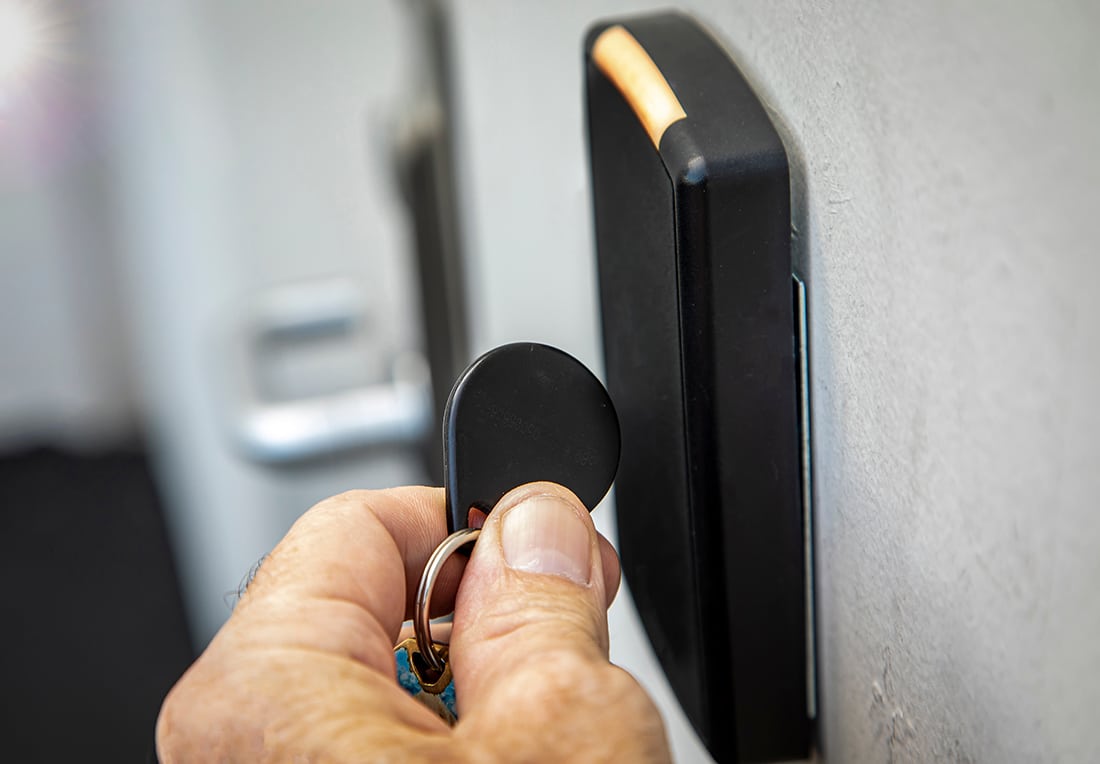
When it comes to improving school safety, technology solutions like video surveillance and access control can help you keep unwanted visitors out of your school and allow those who need access to your learning community to gain entry in a way you can track, monitor, and regulate.
3. Create a Supportive Environment
Improving school safety requires a supportive environment. And a supportive environment encompasses administrative and counseling support for students who need it. While those resources are incredibly essential and impactful, they’re only part of the story.
The school safety ecosystem also includes resource officers and police, training, threat assessment, compliance with state and federal law, and technology infrastructure. That technology infrastructure, in order to be effective, must be comprehensive. Total coverage ensures everyone can be made aware of an emergency quickly and effectively. With tech solutions like video surveillance, access control, paging systems, and VoIP phone systems, your safety technology ecosystem becomes all the more responsive.
Creating a supportive environment begins with empowering confidence. That comes from knowing that everyone can get the important emergency notification messages they need when it matters most. This is achieved through utilizing and integrating underlying systems that enable rapid communication when every second counts.
4. Get Stakeholders Involved throughout the Process of Making Your School Safer
Making schools and districts safer is a team effort. The most commonly recognized players are our school administrators, staff, teachers, counselors, technology professionals, and the local emergency services teams.
But it bears mentioning that custodians, parents, guardians, teaching aides, school board members, and PTA members can also help to actively improve school safety when they’re brought to the table to share their insights. Whether it’s a feedback session, more formal meetings, or presentations at their meetings, getting these groups on board is a great asset.
It also serves to keep everyone on the same page in case of a real emergency.
Each of these groups or individuals has a unique perspective on what’s working, what may need improvement, and how that improvement might be achieved. And they all share in your goal of protecting those within your school walls and on your grounds each day.
5. Create Partnerships That Foster a More Robust School Safety Ecosystem
Fostering a truly comprehensive and robust school safety ecosystem also includes those in disciplines beyond education.
Enhancing your relationships with local emergency responders and police is a great place to start. While you’ve surely established these relationships, it can be impactful to foster them with more regular meetings, an ongoing discussion on potential improvements, and an exploration of enhancements for things like drills and best practices.
Developing partnerships with a safety and communications technology partner like Eastern DataComm is also immensely valuable. These relationships can help you prepare in every possible way for an emergency, unearthing vulnerabilities you and your team may not yet have been aware of, but now can proactively address. Ultimately, building these relationships can lead to a stronger school safety ecosystem overall. Professionals can help you strategically improve your school safety ecosystem by educating, implementing, and advising you regarding your school’s evolving needs. Our team at Eastern DataComm is dedicated to doing just that.
6. Recognize Potential Vulnerabilities in Your Buildings and Grounds and Work to Address Them
It can be devastating to reflect on past tragedies from Columbine to Uvalde and realize that our schools may have similar challenges when it comes to safety even today. But the very act of identifying these potential areas of vulnerability is a step in the right direction.
One way to begin the process of identifying issues in your buildings and grounds is to connect with your team and a safety and technology advisor or vendor partner. Together, you can move through a comprehensive assessment and create a game plan for enhancements that will really make all the difference in the event of a school-wide emergency.
At Eastern DataComm, our team begins this process. Our school safety consultative and diagnostic approach allows us to partner with schools and districts to assess and take meaningful action to address areas of potential vulnerability and empowers our customers to take charge of creating safer schools for today and beyond.
7. Consider Integrating Your School Safety Technology for Swifter, Streamlined Responses to Emergencies
A final consideration that bears noting when it comes to improving your school’s safety is the power of integration. Integrating your technology solutions, from phones to public address (PA) systems, video surveillance to access control, can reduce the chance of human error during stress-filled emergency situations.
Eastern DataComm’s LENS + OPTICS system is a practical example of this integrated approach to school safety. The Lockdown and Emergency Notification System (and its self-monitoring OPTICS system) allow schools to immediately notify everyone on campus, along with law enforcement and first responders, once a threat has been recognized.
The process begins with the push-button activation of a lockdown, shelter-in-place, or evacuation. This emergency notification solution includes scalable, integrated technology from phones, wireless devices, strobes, and pre-recorded notifications. This comprehensive approach to lockdowns ensures that everyone is aware of the situation and can respond efficiently and effectively, with a reduced risk of human error.
For further customization, the integrations can be personalized to the needs of your school so that you have the means to achieve a connected and protected school environment.
It’s truly the system you want in place when every second counts.
Strengthening Access Control for Schools: Beyond Visitor Management
While monitoring visitors is essential, schools must take a proactive approach to access control to prevent unauthorized entry.
Key Access Control Solutions
- Electronic Badge Systems – Require students, staff, and visitors to scan ID badges at entry points, ensuring only authorized individuals can access school buildings.
- Remote Locking Mechanisms – Allow administrators to secure all doors remotely during an emergency, preventing intruders from moving freely through the school.
- Door Prop Alarm Systems – Detect propped-open doors and send alerts to security personnel, reducing the risk of unauthorized access.
- Man-Trap Entryways – A two-door entry system that requires visitor verification before allowing full access, adding an extra layer of security.
How Schools Can Implement Stronger Access Control
- Conduct monthly access audits to identify vulnerabilities in entry points and lock systems.
- Integrate access control with emergency notification systems to trigger automatic lockdowns.
- Train staff on how to use and enforce access control protocols effectively.
School Safety Laws and Compliance: What Schools Must Follow
Beyond emergency planning and security upgrades, compliance with federal and state safety laws is essential to ensuring a legally sound and effective security strategy.
Federal Regulations That Impact School Security
Kari’s Law – Requires that all multi-line telephone systems (MLTS) allow users to dial 911 directly without needing to dial a prefix. This ensures instant emergency communication from any school phone.
RAY BAUM’s Act – Schools must ensure that 911 calls provide a precise location, such as room number or building name, so first responders know exactly where to go.
Alyssa’s Law – Requires schools to install silent panic alarms directly connected to law enforcement, reducing response times during emergencies.
Why Compliance Matters
Non-compliance with these regulations can lead to delays in emergency response, legal liabilities, and funding issues. Schools should routinely audit their phone systems, emergency notification tools, and access control measures to ensure compliance.
The Financial Impact of School Security: Why Investment Is Essential
Some schools delay security upgrades due to budget constraints, but investing in education security is not optional—it’s necessary.
The Hidden Costs of Security Failures
Schools that experience security breaches, unauthorized intrusions, or emergency response delays can face the following:
- Legal consequences if safety compliance is not met.
- Higher insurance premiums due to increased liability risks.
- Potential loss of funding if state safety standards are violated.
Federal and State Funding for School Safety
- Bipartisan Safer Communities Act – Provides $1 billion in federal grants for school security and mental health programs.
- STOP School Violence Act – Offers funding for security technology, threat assessments, and school safety training.
- State-Level Grants – Many states offer specific funding opportunities for access control, emergency notification systems, and security infrastructure upgrades.
How Schools Can Secure Funding for Safety Upgrades
- Identify grant opportunities through state and federal agencies.
- Work with security vendors like Eastern DataComm to build a cost-effective implementation plan.
- Leverage community partnerships for additional financial support.
The Future of School Security: Emerging Technologies to Watch
Advancements in security technology continue to shape how schools detect threats, respond to emergencies, and improve communication.
AI-Powered Security Enhancements
- Facial Recognition Entry Systems – Restrict access to authorized personnel and flag unknown individuals in real time.
- Gun Detection AI for Security Cameras – Uses pattern recognition software to detect weapons and alert authorities instantly.
- Automated Lockdown Systems – AI-driven access control that automatically locks doors when a threat is detected.
- Smart Panic Buttons – Wireless devices that trigger instant lockdowns and emergency alerts when activated.
Integration with Existing School Security Systems
New security technologies must be compatible with existing infrastructure, such as intercom systems, video surveillance, and access control tools, to ensure a seamless emergency response.
Improving School Safety Starts with the Right Technology Partner
Creating a safe and secure learning environment requires proactive planning, the right technology, and expert guidance. If you’re a teacher looking to make your school a safer place, we encourage you to share this resource with your administration.
And if you’re an administrator, we’d love to connect with you to explore technology solutions that augment your emergency operations plans.
At Eastern DataComm, we help schools implement:
- Advanced access control systems to restrict and monitor entry.
- Emergency notification solutions that integrate with paging, text, and digital signage.
- VoIP phone systems that meet Kari’s Law and RAY BAUM’s Act compliance.
- AI-powered security enhancements for real-time threat detection.
Reach out to Eastern DataComm today to schedule a customized School Safety Consultation to keep your community connected and protected.
Also Read: 5 Ways to Improve Schools Safety